Décoration murale

How to create a Haussmannian style in your home without major renovations?

Comment créer un style haussmannien chez soi sans gros travaux ?

Chic, elegant and inseparable from our capital, the Haussmann style never ceases to seduce.

Beautiful high ceilings, herringbone parquet flooring, marble fireplace, adjoining rooms... The Haussmann style has its own codes and is mainly defined by its moldings, present in all the rooms.

Placed on the ceiling, on doors, along basement walls, or around the fireplace, they are everywhere.

So, how can you reproduce or restore a Haussmannian style in your interior without carrying out major work?

Cornices, picture rails, rosettes, door frames, baseboards, 3D panels... Orac Decor has established itself as a manufacturer of revolutionary decorative elements, offering collections that are both classic and contemporary.

Orac has developed innovative materials that are robust, water-washable, and durable. Practical and lightweight, the moldings are ready to paint and easily installed with a simple strip of adhesive.

If you are a DIY enthusiast, you can install them yourself, provided you follow the installation steps and have the right equipment.

Although white is the typical color of Haussmann-style apartments, it can be paired with a dark color: midnight blue, dove gray, or sage green for a contemporary and stylish touch. More subdued tones, such as pale pink or beige, are an interesting alternative because they bring a softness to the room.

After taking measurements, getting a quote, and finding the right materials, you'll have textured walls in the entryway, a ceiling rose in the living room, or light cornices in the bedroom to instantly change the mood.

If you are unsure between different models, please do not hesitate to visit the store; most of the models are on display there.

We will be happy to advise you and you can take away samples to test them at home.

Elegant, timeless, and inextricably linked to Parisian architecture, the Haussmann style remains as appealing as ever. High ceilings, herringbone parquet flooring, marble fireplaces, large windows, enfilade rooms... Haussmannian apartments boast a strong architectural identity, recognizable in particular by their numerous decorative mouldings.

Ceiling cornices, wall mouldings, dado rails, door surrounds, rosettes, and picture rails: these elements add dimension to walls and immediately bring character to a room.

But do you necessarily need to live in a genuine Haussmannian apartment to enjoy this aesthetic? Not at all! It is now possible to create or recreate a Haussmannian style in a contemporary interior, without undertaking major renovation work.

Thanks to modern decorative mouldings, cornices, and various elements offered by specialized manufacturers like Orac, a few well-chosen adjustments can be enough to completely transform a room.

What defines the Haussmannian style?

Before embarking on a renovation, it is important to understand the main codes of the Haussmann style.

Emerging in the 19th century during the major works carried out in Paris under Prefect Haussmann, Haussmann buildings are distinguished by a particularly elegant and structured architecture. Inside, this architecture is reflected in the proportions of the rooms and in the work done on the walls and ceilings.

Among the characteristic elements, we find:

  • wall and ceiling moldings;
  • decorative cornices;
  • rosettes around light fixtures;
  • wainscoting;
  • door frames;
  • marble fireplaces;
  • traditional parquet flooring, especially herringbone;
  • large openings and high ceilings.

Moldings therefore play an essential role. They structure volumes, highlight certain parts of the architecture, and create that impression of refinement characteristic of Haussmann apartments.

Good news: it's not necessary to change your entire decor to recreate this spirit in your home.

Rosace ronde 82cm dans salon parisien

Among the characteristic elements, we find:

  • wall and ceiling moldings;
  • decorative cornices;
  • rosettes around light fixtures;
  • wainscoting;
  • door frames;
  • marble fireplaces;
  • traditional parquet flooring, especially herringbone;
  • large openings and high ceilings.

Moldings therefore play an essential role. They structure volumes, highlight certain parts of the architecture, and create that impression of refinement characteristic of Haussmann apartments.

Good news: it's not necessary to change your entire decor to recreate this spirit in your home.

Rosace ronde 82cm dans salon parisien

Mouldings therefore play an essential role. They structure volumes, highlight certain parts of the architecture, and create that impression of refinement characteristic of Haussmannian apartments.

The good news is that you don't need to change your entire decor to recreate this style in your home.

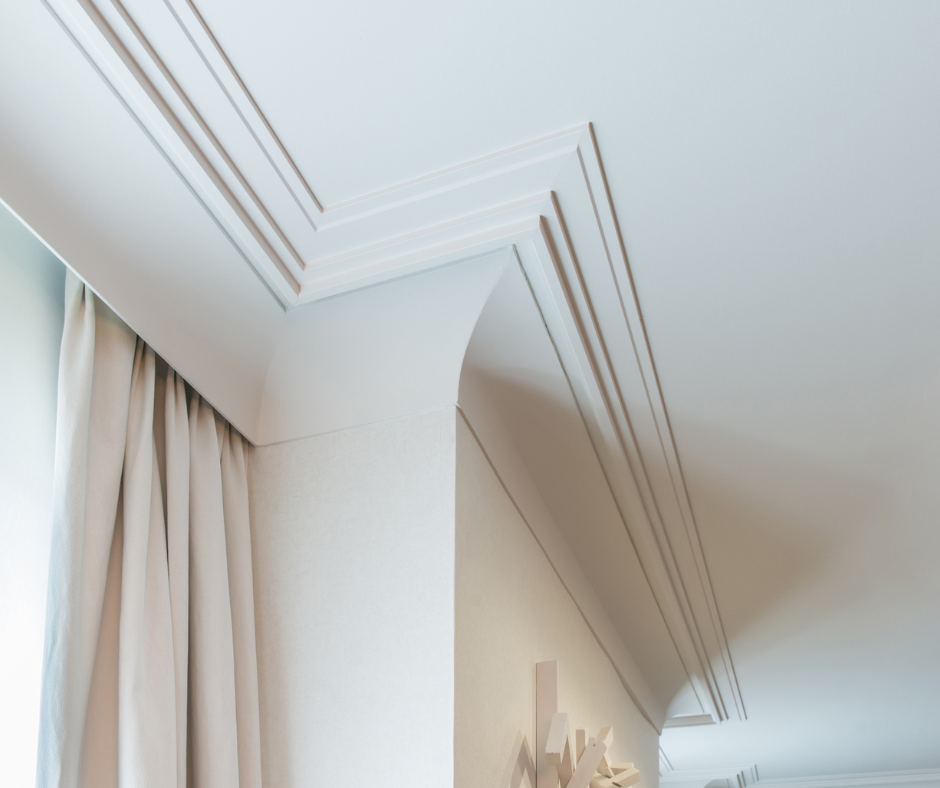
Cornices to finish the junction between wall and ceiling

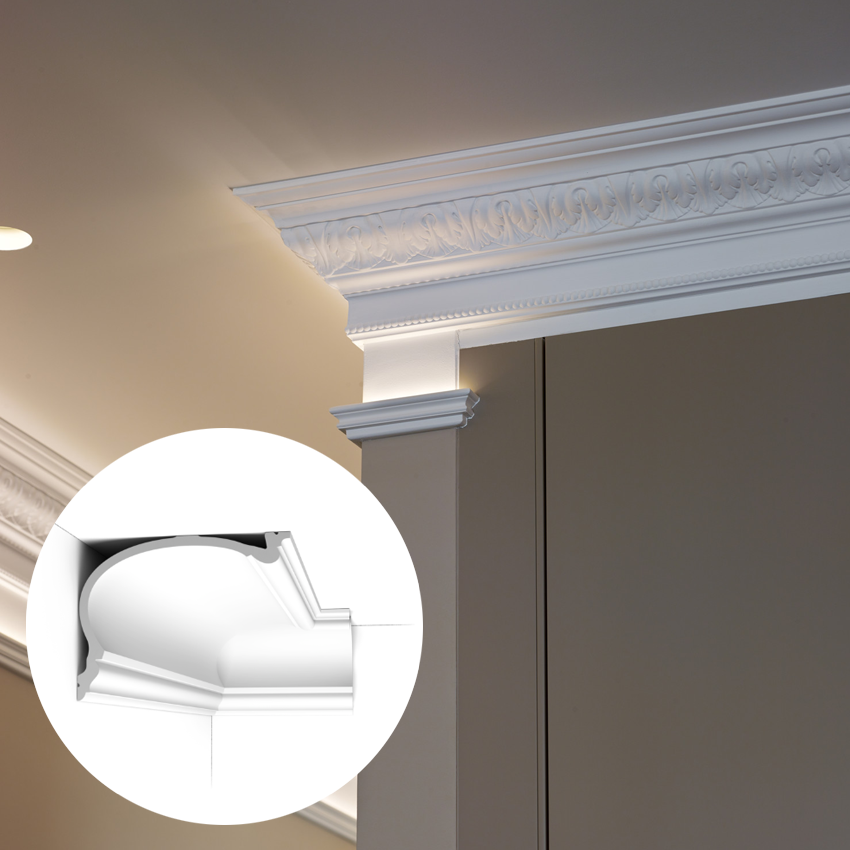
The decorative cornice is one of the essential elements for creating a Haussmannian atmosphere.

Installed at the junction between the wall and the ceiling, it adds depth to the room and emphasizes its height. In an interior with sufficiently high ceilings, it can truly alter the perception of space.

Contemporary models also allow for integrated indirect lighting. A lighted cornice can thus create a soft and diffused light, particularly appealing in a living room, bedroom, or entryway.

This solution provides a sophisticated result without having to undertake a complete ceiling renovation.

Cornices to finish the junction between wall and ceiling

The decorative cornice is one of the essential elements for creating a Haussmannian atmosphere.

Installed at the junction between the wall and the ceiling, it adds depth to the room and emphasizes its height. In an interior with sufficiently high ceilings, it can truly alter the perception of space.

Contemporary models also allow for integrated indirect lighting. A lighted cornice can thus create a soft and diffused light, particularly appealing in a living room, bedroom, or entryway.

This solution provides a sophisticated result without having to undertake a complete ceiling renovation.

Haussmannian mouldings: the easy solution for transforming an interior

If you want to add character to a modern interior, decorative mouldings are probably one of the simplest solutions.

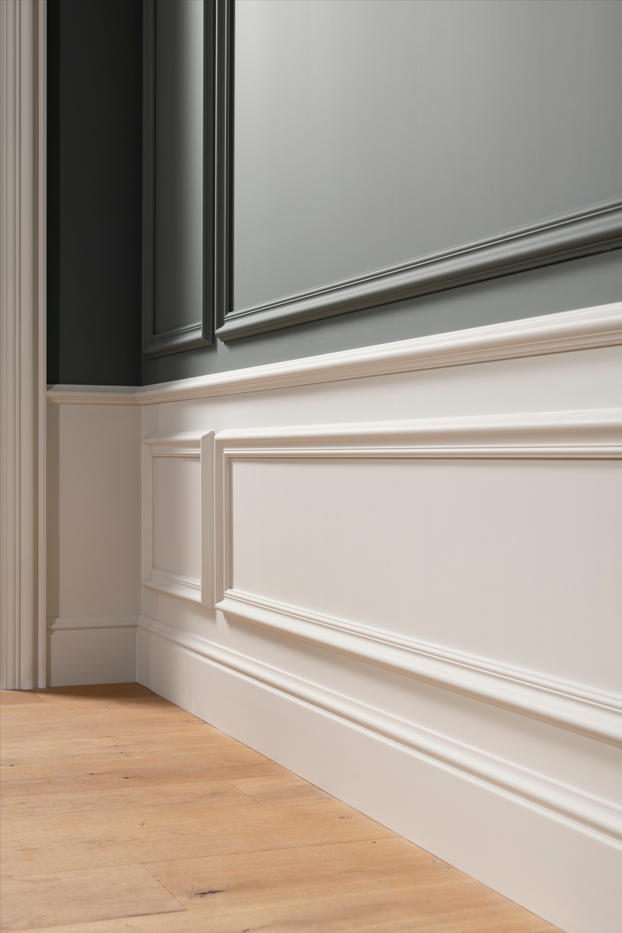
Traditionally used to protect or decorate walls, chair rails now visually structure a room. They can be used alone or combined with other mouldings to create different levels on a wall.

In a classic decor, for example, they can be installed at about one-third of the wall height to create a visual dado. Above this, a different color can be applied to accentuate the contrast.

View the full range of mouldings

Haussmannian mouldings: the easy solution for transforming an interior

If you want to add character to a modern interior, decorative mouldings are probably one of the simplest solutions.

Traditionally used to protect or decorate walls, chair rails now visually structure a room. They can be used alone or combined with other mouldings to create different levels on a wall.

In a classic decor, for example, they can be installed at about one-third of the wall height to create a visual dado. Above this, a different color can be applied to accentuate the contrast.

View the full range of mouldings

Ceiling rose: the detail that makes all the difference

Another iconic element of the Haussmannian style: the ceiling rose.

Traditionally placed around a chandelier or ceiling light, it adds an extra decorative touch to the ceiling. It can be very elaborate in a classic interior or much more streamlined in a contemporary decor.

A ceiling rose, in particular, helps create a focal point around the light fixture. Combined with a cornice and some wall moldings, it contributes to recreating the elegant atmosphere of old apartments.

Again, there's no need to completely redo the ceiling. Modern decorative models are designed to be relatively light and easy to install.

View the full range of rosettes

Ceiling rose: the detail that makes all the difference

Another iconic element of the Haussmannian style: the ceiling rose.

Traditionally placed around a chandelier or ceiling light, it adds an extra decorative touch to the ceiling. It can be very elaborate in a classic interior or much more streamlined in a contemporary decor.

A ceiling rose, in particular, helps create a focal point around the light fixture. Combined with a cornice and some wall moldings, it contributes to recreating the elegant atmosphere of old apartments.

Again, there's no need to completely redo the ceiling. Modern decorative models are designed to be relatively light and easy to install.

View the full range of rosettes

Door frames and wall mouldings

To accentuate the Haussmannian style, also consider door frames.

A simple door can take on a whole new dimension when surrounded by decorative moldings. This technique highlights openings and gives a more polished finish.

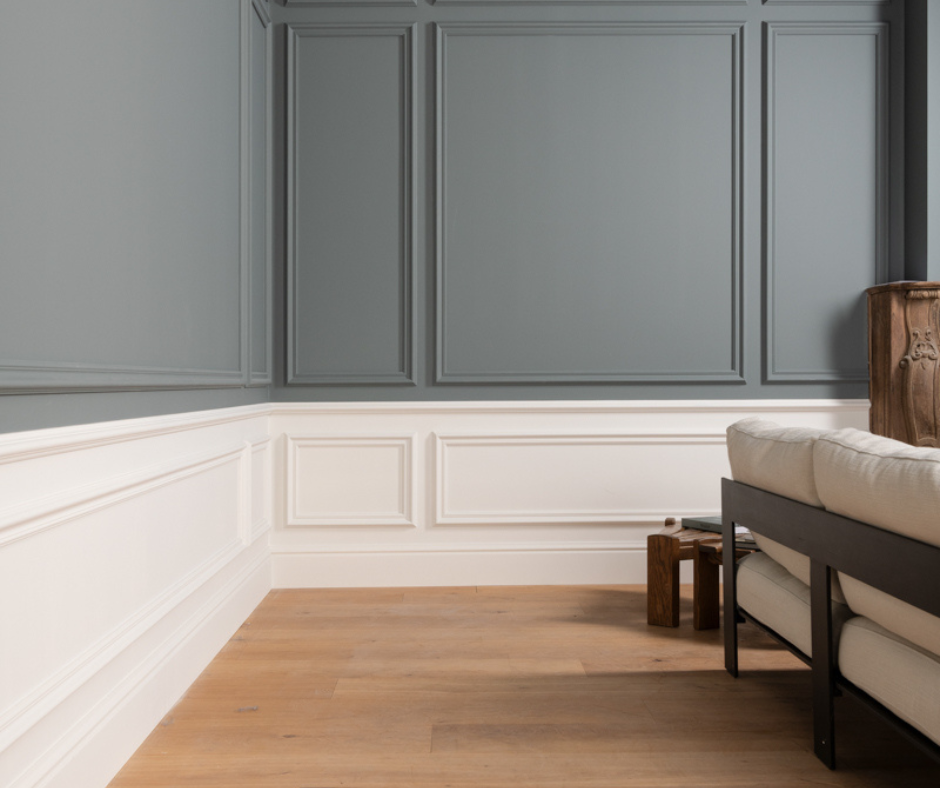
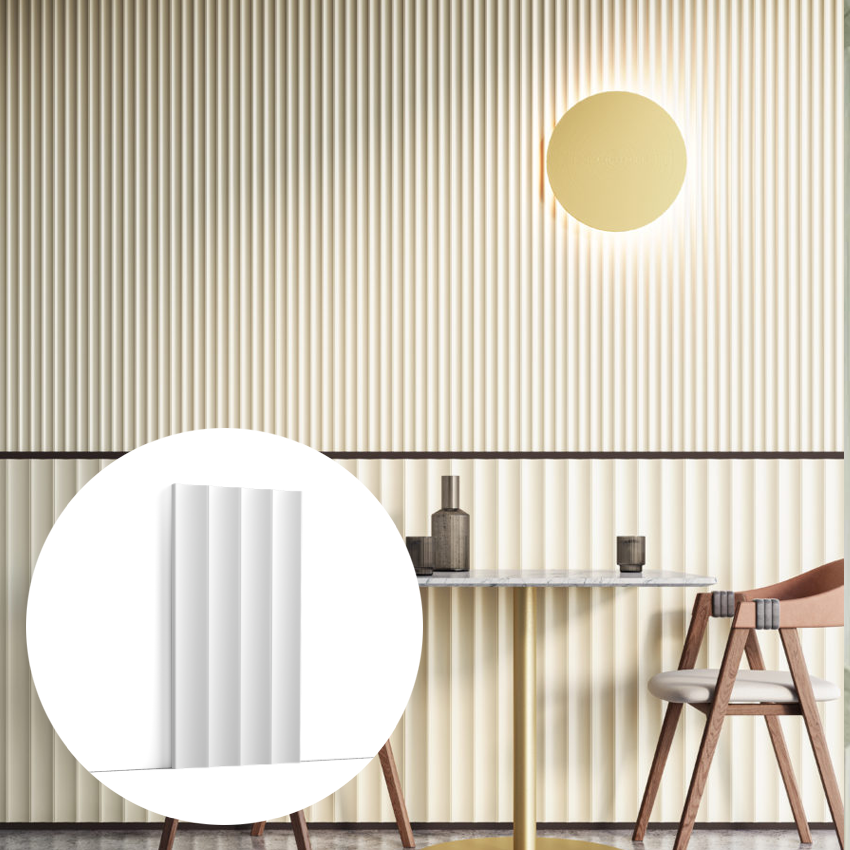
Moldings can also be used directly on walls to create decorative panels.

A very popular technique involves creating several frames of different sizes using moldings. This composition adds rhythm to a large wall while maintaining an elegant decoration.

In an entryway, living room, or dining room, this type of decoration can transform a previously very neutral surface into a true architectural element.

View all framing options

Door frames and wall mouldings

To accentuate the Haussmannian style, also consider door frames.

A simple door can take on a whole new dimension when surrounded by decorative moldings. This technique highlights openings and gives a more polished finish.

Moldings can also be used directly on walls to create decorative panels.

A very popular technique involves creating several frames of different sizes using moldings. This composition adds rhythm to a large wall while maintaining an elegant decoration.

In an entryway, living room, or dining room, this type of decoration can transform a previously very neutral surface into a true architectural element.

View all framing options

What material should you choose for your decorative mouldings?

Traditional moldings can be made from various materials, including plaster. While they offer a particularly elegant finish, their installation can be more complex and time-consuming.

Today, specialized manufacturers offer simpler alternatives.

Orac, for example, offers a wide range of decorative elements for walls and ceilings: cornices, dado rails, moldings, rosettes, door frames, and decorative panels.

These products are designed with modern materials that offer several advantages for interior renovation: they are lightweight, durable, and can be painted to match existing decor. Their ease of installation also makes it possible to consider certain projects without hiring a company for every step.

Can you install mouldings yourself?

Yes, in many cases, installing decorative moldings can be done by yourself.

However, it is important to properly prepare the work area. Before starting, accurately measure the walls and determine the placement of each element.

Depending on the product chosen, you may need, among other things: a tape measure, a level, a pencil, a suitable saw, a miter box for making cuts, a suitable adhesive, finishing products, and paint.

For more complex projects, especially when many cuts need to be made or when working on irregular walls, the intervention of a professional may be preferable.

Where can I find your mouldings and decorative elements?

Are you looking for moldings, cornices, picture rails, or decorative elements to create a Haussmannian-style interior?

At Cimaises & Plus, you can find various solutions to personalize your walls and ceilings.

If you're hesitating between several models, feel free to come and discover the available items in our store. Being able to see the products and compare models helps you better appreciate their size, finish, and appearance.

You can also get advice on choosing the most suitable elements for your project and, depending on the items, leave with samples to test them directly in your home.

FAQ: Haussmann style and decorative mouldings